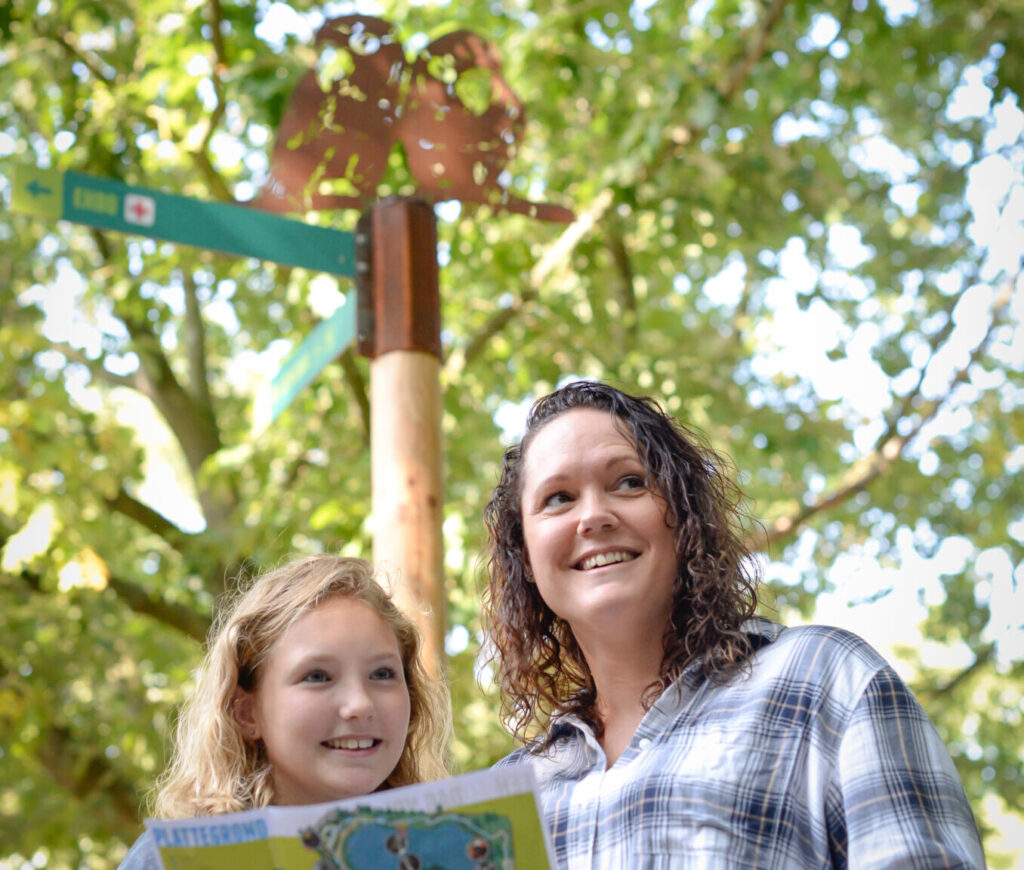
Every day we organize fun (and educational!) activities. Check out what's on the program here.
Do you want to know what there is to see and how to get there? Have a look at the map, then how not to miss anything.
You come along in our parkagainst special birds and mammals. Walk through their natural habitat, watch and learn during the feeding talks or visit the unique bird demonstration. There is plenty to experience!
More than 230 animal species live in Avifauna. All sorts beautiful birds live with it small mammals from their habitat.
Did you know that we also pay a lot of attention to nature in our park, and that we consciously invest in biodiversity?
Vogelpark Avifauna is very central in the Randstad and is easily accessible, both by car and by train OV.
Here you can view the opening hours and rates for a day out in Avifauna, but did you know that a subscription has many advantages?
Our beautiful park is also accessible for people with reduced mobility. View here which facilities are available.
A day out in our animal park is not complete without something delicious to eat and drink. We offer something for everyone will!
We invest in the protection of flora and fauna in various ways, both in our park and far beyond our national borders. That social meaning is anchored in everything we do.
Vogelpark Avifauna continuously invests knowledge and resources in nature conservation projects. Every year we support in various projects, both in our own environment and in vulnerable nature areas elsewhere in the world.
To ensure the well-being of our animals and attractive to remain for visitors, we must constantly renew our animal park. We translate the latest scientific insights into our approach and care of the animals.
As an employer, Avifauna plays an important role in the region. Hundreds of young people found their first (holiday) job with us. Specialized professionals know where to find us from all over the country, as do many volunteers and interns Besides.
On the estate of Mr. Van den Brink started as a hobby Vogelpark Avifauna. Op May 17, 1950 opened it very first bird park in the world officially are deur.
Create a day Avifauna guarantees many speel fun with an educational touch. Possibly te combine with Archeon!
We have special BSO arrangements for childcare organizations. Nice, such a different activity!
Birdlife is for the municipalities of Alphen aan den Rijn, Kaag & Braassem and Nieuwkoop active as NME partner.
Do you already know about what you your speakturn? We are happy to help you with our cool presentation boxes!
Ostriches live in the deserts, steppes and savannas of Africa. Originally, the ostrich was found throughout Africa and the Middle East, but today its habitat is limited to East Africa, Southern Africa and the Sahel region. Into the ostriches Vogelpark Avifauna belong to a very rare subspecies; the North African Ostrich. There is an active management program for this species (EEP), where Vogelpark Avifauna participates with these birds.
Ostriches have a small head, a long neck and very long legs. With these legs, an ostrich can take steps of up to 3,5 meters. They can also run super fast, reaching speeds of up to 70 kilometers per hour. The legs have two toes, and one of these toes contains a large nail. This serves for stability and also for defense against threats.
English name
Common ostrich
Scientific name
Struhio camelus
living environment
Deserts and savannas in Africa
Nutrition
Grass, leaves, insects and small vertebrates
Weight
Man 150 kilos, woman 100 kilos
Nest size
2 - 11 eggs per ostrich
Hatching time
42 - 46 days
IUCN status
Not threatened
…to conserve vulnerable or endangered species. With our special bird collection and the expertise of our employees, we contribute to the preservation of biodiversity, both in the park and in the region.
The ostrich lays it allerlargest egg all birds. For example, an egg weighs 1,5 kilograms and about 25 chicken eggs fit in it. The male is jointly responsible for brooding and creates his own nest. Several females lay their eggs in this one nest. It can therefore happen that a nest contains as many as 78 eggs. When the young hatch after six weeks, they leave the nest and are protected by the parents for the first year of life. It can happen that other ostriches with young join each other, resulting in so-called ostrich nurseries.